
 Türkçe
 English
He is a urologist who prioritizes patient satisfaction and stands out with his reliable approach and successful treatments.
Minimally Invasive Prostate Surgery in Turkey
What Is Prostate Enlargement?
Prostate enlargement, medically known as Benign Prostatic Hyperplasia (BPH), is a non-cancerous condition that commonly develops as men get older. It affects millions of men worldwide and becomes increasingly common after the age of 50.
The prostate surrounds the urethra, the tube that carries urine from the bladder. As the gland enlarges, it gradually narrows the urethra, making it more difficult for urine to pass. This obstruction may cause a variety of lower urinary tract symptoms, including a weak urine stream, difficulty starting urination, frequent urination, waking up several times at night to urinate (nocturia),urgency, and the feeling that the bladder has not been completely emptied.
Although BPH is not prostate cancer and does not increase the risk of developing cancer, untreated enlargement can progressively worsen over time and may significantly reduce a man's quality of life. Age-related hormonal changes, genetic predisposition, obesity, diabetes, and lifestyle factors are among the most important contributors to the development of this condition.
When Is Surgery Recommended for Prostate Enlargement?
Many men experience significant symptom relief with medications. However, surgery may become necessary when medical treatment no longer provides adequate improvement or when complications arise.
Surgical treatment is generally recommended for patients who experience:
- Persistent or severe urinary symptoms despite medication
- Recurrent urinary tract infections
- Urinary retention requiring catheterization
- Bladder stones caused by incomplete bladder emptying
- Blood in the urine related to prostate enlargement
- Bladder damage or reduced bladder function
- Kidney impairment resulting from long-term urinary obstruction
The decision to perform surgery is individualized and depends on several factors, including prostate size, symptom severity, overall health, age, lifestyle, and the patient's treatment expectations.
What Is Minimally Invasive Prostate Surgery?
Minimally invasive prostate surgery refers to modern surgical techniques performed without making an external incision. Instead, specialized endoscopic instruments are introduced through the natural urinary passage (the urethra) to access the enlarged prostate.
The objective of these procedures is to remove or reduce the obstructing prostate tissue, allowing urine to flow freely again while minimizing damage to surrounding structures.
Compared with traditional open surgery, minimally invasive techniques offer several important advantages, including:
- Smaller risk of bleeding
- Less postoperative pain
- Shorter hospital stay
- Faster recovery
- Lower complication rates
- Earlier return to normal daily activities
Advances in endoscopic technology and laser systems have made these procedures safer, more precise, and highly effective for men with different prostate sizes.
Who Is a Candidate for Minimally Invasive Prostate Surgery?
Minimally invasive surgery is usually recommended for patients whose symptoms continue despite medical therapy or for those who develop complications related to prostate enlargement.
Candidates commonly include men who have:
- Moderate to severe lower urinary tract symptoms
- Large prostate volume
- Recurrent urinary retention
- Frequent urinary infections
- Bladder stones
- Kidney function impairment due to bladder outlet obstruction
- Long-term dependence on a urinary catheter
The most appropriate surgical technique is selected after evaluating prostate size, urinary symptoms, general health, current medications, and the patient's personal preferences.
Types of Minimally Invasive Prostate Surgery
Several minimally invasive techniques are available for treating BPH. Each procedure has unique advantages and may be more suitable for certain patients depending on prostate size and clinical findings.
TURP (Transurethral Resection of the Prostate)
Transurethral Resection of the Prostate (TURP) has long been considered the standard surgical treatment for BPH. During the procedure, a resectoscope is inserted through the urethra, and electrical energy is used to remove small pieces of enlarged prostate tissue.
TURP is generally recommended for prostates of moderate size. It provides excellent long-term symptom relief and significantly improves urinary flow. Although highly effective, prolonged procedures may carry a small risk of fluid absorption, known as TUR syndrome, particularly with older monopolar systems.
HoLEP (Holmium Laser Enucleation of the Prostate)
HoLEP is one of the most advanced laser techniques available for treating enlarged prostates. Using a high-powered holmium laser, the surgeon completely separates the enlarged prostate tissue from the surrounding capsule. The tissue is then pushed into the bladder, fragmented with a morcellator, and safely removed.
One of the greatest advantages of HoLEP is that it can be performed regardless of prostate size, making it suitable even for very large glands. Laser technology minimizes bleeding, shortens catheterization time, and allows faster recovery. Because the removed tissue is preserved, it can also be examined by a pathologist to exclude unexpected prostate cancer.
GreenLight Laser Therapy
GreenLight Laser Therapy removes excess prostate tissue by vaporizing it with high-energy laser light. The procedure is particularly effective for small to moderately enlarged prostates.
Its excellent bleeding control makes it an attractive option for patients taking blood-thinning medications. Since the tissue is vaporized during treatment, no specimen remains for pathological evaluation. Patients typically experience shorter hospital stays and a rapid return to everyday activities.
Bipolar TURP (Plasma Kinetic TURP)
Bipolar TURP is an advanced modification of conventional TURP. Instead of monopolar electrical energy, it uses bipolar technology, allowing normal saline irrigation during surgery.
This significantly reduces the risk of TUR syndrome while providing excellent surgical precision. Bipolar TURP combines the proven effectiveness of traditional TURP with improved safety and is commonly used for men with medium-sized prostates.
ThuLEP (Thulium Laser Enucleation of the Prostate)
ThuLEP is another laser enucleation technique that utilizes thulium laser energy to remove enlarged prostate tissue.
The shallow penetration depth of the thulium laser allows highly precise tissue dissection with excellent control of bleeding. Patients often benefit from reduced postoperative irritation, shorter catheterization periods, and rapid recovery.
Rezūm Water Vapor Therapy
Rezūm Therapy is a minimally invasive treatment that uses sterile water vapor to shrink enlarged prostate tissue. The steam is delivered directly into the prostate, where it destroys excess cells. Over the following weeks, the body naturally absorbs the treated tissue, gradually improving urinary flow.
The procedure is usually performed under local anesthesia or light sedation and does not require major surgery. Rezūm is most suitable for men with mild to moderate BPH who wish to preserve sexual function and avoid more invasive procedures. Because symptom improvement occurs gradually, the full benefits may take several weeks to become noticeable.
Recovery After Minimally Invasive Prostate Surgery
Recovery depends on the surgical technique performed, the patient's overall health, and prostate size. Most patients are discharged within one or two days, while some minimally invasive procedures allow same-day discharge.
Temporary urinary frequency, mild burning during urination, or small amounts of blood in the urine may occur during the early healing period. These symptoms generally improve within a few weeks.
Following the surgeon's recommendations regarding hydration, physical activity, medication, and follow-up visits helps ensure a smooth recovery and optimal long-term results.
Why Choose Op. Dr. Emrah Topbaş?
All diagnostic evaluations, minimally invasive procedures, and surgical treatments presented on this website are personally performed by Op. Dr. Emrah Topbaş. Every patient receives a personalized treatment plan based on their symptoms, prostate size, overall health, and treatment goals.
Using modern surgical technologies and evidence-based treatment approaches, Dr. Topbaş aims to achieve excellent functional outcomes while prioritizing patient safety and comfort. From the initial consultation through postoperative follow-up, every stage of care is carefully tailored to the individual needs of each patient.
Minimally Invasive Prostate Surgery Cost in Turkey (2026)
The cost of minimally invasive prostate surgery in Turkey depends on several factors, including the surgical technique used, the size of the prostate, the hospital where the procedure is performed, the surgeon's experience, and whether advanced laser technology is required.
Procedures such as HoLEP, GreenLight Laser Therapy, Bipolar TURP, ThuLEP, and Rezūm differ in terms of equipment, operating time, and postoperative care, which can influence the overall treatment cost. Additional services such as preoperative diagnostic tests, anesthesia, hospitalization, and follow-up appointments may also affect the final price.
In 2026, the cost of minimally invasive prostate surgery in Turkey generally ranges between 100,000 TL and 250,000 TL. Since every patient has unique clinical needs, an individualized evaluation is essential before providing an accurate treatment plan and quotation.
Preoperative Assessment Before Minimally Invasive Prostate Surgery
A comprehensive evaluation is performed before surgery to determine the most appropriate treatment method. This assessment usually includes a physical examination, prostate-specific antigen (PSA) testing, urinary flow measurement (uroflowmetry),transrectal ultrasound (TRUS) to determine prostate size, urine analysis, and blood tests. Additional imaging or a prostate biopsy may be recommended when clinically indicated.
Patients are also evaluated by the anesthesia team to ensure they are suitable for surgery. If blood-thinning medications are being used, they may need to be temporarily discontinued or replaced under medical supervision.
How Is Minimally Invasive Prostate Surgery Performed?
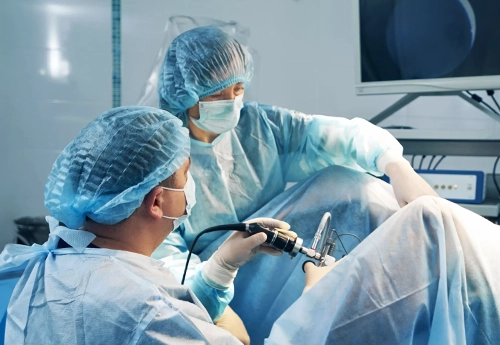
Most minimally invasive prostate procedures are performed under spinal or general anesthesia using advanced endoscopic equipment. No external incision is required because all surgical instruments are inserted through the urethra.
Depending on the selected technique, the enlarged prostate tissue is either removed, vaporized, or completely enucleated using electrical or laser energy. In procedures such as HoLEP, the removed tissue is transferred into the bladder, fragmented with a morcellator, and extracted from the body. A temporary urinary catheter is usually placed at the end of the procedure to support bladder drainage during the initial healing period.
Which Type of Anesthesia Is Used?
The choice of anesthesia depends on the selected surgical technique, the patient's medical condition, and the anesthesiologist's evaluation. Most procedures are performed under spinal anesthesia, while general anesthesia may be preferred in selected patients.
Certain minimally invasive treatments, including Rezūm Therapy, may be performed using local anesthesia with light sedation, allowing selected patients to return home on the same day.
Advantages of Minimally Invasive Prostate Surgery
Modern minimally invasive techniques provide effective relief of urinary obstruction while reducing surgical trauma. Compared with conventional open surgery, these procedures offer several important advantages:
- No external surgical incision
- Reduced blood loss
- Lower risk of postoperative complications
- Less postoperative discomfort
- Shorter hospital stay
- Faster recovery
- Earlier return to work and normal daily activities
- Excellent long-term urinary outcomes
Many laser-based procedures are also suitable for patients taking anticoagulant medications because of their superior bleeding control.
Minimally Invasive vs. Open Prostate Surgery
Open prostate surgery is now performed far less frequently than in the past, largely due to significant advances in minimally invasive surgical techniques.
While open surgery requires an abdominal incision and is generally reserved for selected cases involving extremely large prostates or complex anatomical conditions, minimally invasive procedures are performed entirely through the urethra without external cuts.
As a result, minimally invasive surgery is associated with less pain, reduced bleeding, shorter hospitalization, faster recovery, and fewer postoperative complications. Techniques such as HoLEP have largely replaced open surgery, even for patients with very large prostates.
Recovery After Minimally Invasive Prostate Surgery
Recovery time varies according to the surgical technique and the patient's overall health. Most patients begin walking within hours after surgery and are discharged within one or two days, while some procedures allow same-day discharge.
Temporary urinary frequency, mild burning during urination, or small amounts of blood in the urine are common during the early recovery period and usually resolve within several weeks. Full recovery of urinary function continues progressively during the healing process.
Postoperative Care and Recovery Tips
Following your surgeon's recommendations is essential for achieving the best possible outcome after surgery. During the recovery period, patients are generally advised to:
- Drink plenty of water to maintain adequate hydration.
- Avoid heavy lifting and strenuous physical activity for several weeks.
- Limit alcohol and excessive caffeine consumption.
- Avoid cycling or activities that place prolonged pressure on the pelvic area.
- Take prescribed medications exactly as directed.
- Attend all scheduled follow-up appointments.
If heavy bleeding, fever, severe pain, or difficulty urinating develops, immediate medical attention should be sought.
What Are the Possible Risks?
Although minimally invasive prostate surgery has a high success rate and an excellent safety profile, every surgical procedure carries potential risks.
Possible complications include:
- Temporary urinary incontinence
- Retrograde ejaculation
- Urinary tract infection
- Bleeding
- Urethral stricture
- Temporary urinary urgency or frequency
- Rare need for repeat treatment
The likelihood of complications depends on the surgical technique, prostate size, the patient's overall health, and the surgeon's experience.
How Long Does Minimally Invasive Prostate Surgery Take?
The duration of surgery varies according to the chosen procedure and the size of the prostate.
Most TURP, Bipolar TURP, HoLEP, GreenLight Laser, and ThuLEP procedures are completed within 60 to 120 minutes, whereas minimally invasive therapies such as Rezūm usually require only 15 to 30 minutes.
Patients can typically resume light daily activities within a short period following treatment.
Does Minimally Invasive Prostate Surgery Affect Sexual Function?
One of the most common concerns among patients is whether surgery will affect sexual health. In most cases, erectile function is preserved because the nerves responsible for erections are not directly involved in surgery for benign prostate enlargement.
However, retrograde ejaculation is a common side effect of many prostate procedures. In this condition, semen flows backward into the bladder instead of leaving the body during ejaculation. Although this does not affect sexual pleasure or erectile function, it may reduce fertility.
Urinary control is generally well preserved, and temporary urinary leakage, when it occurs, usually improves within a few weeks or months with recovery and pelvic floor rehabilitation.
Update Date: 20.03.2026
*This content has been prepared in accordance with the provisions of the "Regulation on Promotion and Information Activities in Health Services" published in the Official Gazette dated 12.11.2025. The information contained in this content is for general informational purposes only and does not constitute guidance or treatment recommendations. The results of all medical procedures, including surgical and interventional procedures, may vary from person to person. For diagnostic and treatment procedures, it is essential to consult a physician and undergo an individual medical evaluation.

Patient Comments

Urology Specialist Ankara, Turkey
 About MeOp. Dr. Emrah Topbaş
Urology Specialist Surgeon Dr. Emrah Topbaş is specialized in prostate, andrology, and pelvic floor treatments. He provides modern diagnostic and treatment services in Ankara.
Read More All TreatmentsSpecialist Doctor Assurance
All treatments, interventional procedures, and surgeries are personally performed by Op. Dr. Emrah Topbaş. Each case is carefully planned in line with current medical practices and ethical principles.
Read More In the PressVisual and Written Media
He closely follows current developments in the field of urology and frequently appears in the media, contributing to interviews and informative content aimed at raising public awareness.
Read More
 About Me
 Contact
 Whatsapp