
 Türkçe
 English
He is a urologist who prioritizes patient satisfaction and stands out with his reliable approach and successful treatments.
Prostate Cancer Surgery (Radical Prostatectomy) Turkey
What is the prostate?
The prostate is a small, walnut-sized gland that is part of the male reproductive system and is located just below the bladder. The urethra passes through this gland, allowing urine and semen to exit the body. The main function of the prostate is to produce the fluid portion of semen and to help transport sperm in a healthy environment.
What is prostate cancer?
Prostate cancer is a malignant disease that develops due to the uncontrolled growth of prostate cells. It is usually a slow-growing tumor, but some subtypes can be aggressive. It is one of the most commonly diagnosed cancers in men worldwide, and its incidence increases with age.
Who is at risk for prostate cancer?
The risk of prostate cancer significantly increases with age. It is especially more common in men over 50 years old. Men with a family history of prostate cancer, particularly those carrying BRCA1/BRCA2 gene mutations, have a higher risk. Additionally, prostate cancer tends to be more aggressive in African-American men.
What are the symptoms of prostate cancer?
Early-stage prostate cancer usually does not cause symptoms. However, as the disease progresses, symptoms such as frequent urination, nocturia (getting up at night to urinate),difficulty urinating, blood in the urine, and pain in the groin area may occur. Bone pain can be seen in cases with bone metastasis.
- Difficulty urinating
- Weak or interrupted urine flow
- Frequent urination (especially at night)
- Feeling of incomplete bladder emptying
- Blood in the urine (hematuria)
- Blood in the semen
- Erectile dysfunction
- Painful ejaculation
- Persistent pain in the groin, hip, or lower back
- Bone pain in advanced cases (especially in the spine, hip, or ribs)
- Unintended weight loss and fatigue
How is prostate cancer treated?
The choice of prostate cancer treatment depends on the stage of the disease, the patient’s age, overall health, and the biological characteristics of the cancer. In early stages, active surveillance, radiotherapy, or surgery may be options, while in advanced stages, hormonal therapy, chemotherapy, or immunotherapies are used. A personalized treatment approach is essential.
When is surgery needed for prostate cancer?
Surgical treatment is generally recommended for localized prostate cancer that has not spread beyond the prostate. Radical prostatectomy may be preferred, especially in young and healthy individuals. However, in high-risk or locally advanced cases, additional treatments before or after surgery may be necessary.
Prostate Cancer Surgery (Radical Prostatectomy) in Turkey
Radical prostatectomy involves the complete removal of the prostate gland, seminal vesicles, and in some cases, pelvic lymph nodes. This operation can provide a cure when the cancer is confined to the prostate. It can be performed using open, laparoscopic, or robot-assisted techniques.
Preparation Process Before Prostate Cancer Surgery
Before radical prostatectomy, a detailed medical history is taken, and imaging studies (MRI, bone scintigraphy) are performed to determine the stage of the disease. Blood tests and PSA levels are evaluated. Cardiac and pulmonary assessments are conducted to ensure suitability for anesthesia. Informing the patient and obtaining consent before surgery is important.
How is Prostate Cancer Surgery Performed?
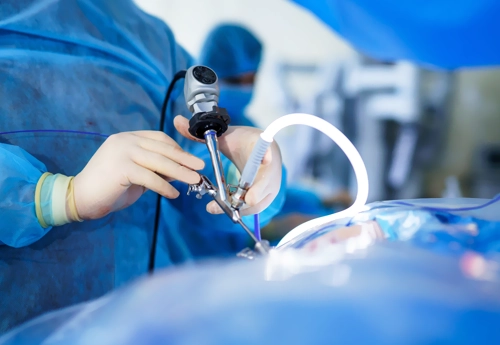
Prostate cancer surgery in Ankara, medically known as radical prostatectomy, is a surgical procedure aimed at the complete removal of the cancerous prostate gland. This operation is generally performed in patients diagnosed with localized prostate cancer, meaning the cancer has not spread beyond the prostate gland. The surgery is done under general anesthesia and can be performed using several techniques: open surgery, laparoscopic (minimally invasive),and robot-assisted laparoscopic surgery (e.g., the da Vinci system).
In the open surgery method, an incision is made in the lower abdomen to directly access the prostate gland. In the laparoscopic method, long, thin surgical instruments are inserted into the abdomen through several small incisions; this technique may result in less bleeding, shorter hospital stays, and faster recovery times. In robot-assisted surgery, the surgeon controls robotic arms from a console to perform the operation with greater precision; this method can offer higher accuracy, especially in nerve-sparing techniques.
Along with the prostate gland, the seminal vesicles located behind the prostate are usually removed. If there is a risk of cancer spreading to the lymph nodes, pelvic lymph nodes may also be removed (pelvic lymph node dissection). Special attention is given to preserving the nerve bundles responsible for urinary control and sexual functions during surgery; damage to these nerves can lead to postoperative complications such as urinary incontinence or erectile dysfunction.
At the end of the operation, a new connection is created between the bladder neck and the urethra, and a urethral catheter is placed to allow urine to drain during the healing process. This catheter is typically removed after a few days or about a week. The entire process may vary depending on factors such as the stage of the disease, the patient's anatomical characteristics, and the surgeon's experience. When applied to the right patient group, radical prostatectomy is an effective treatment that provides long-term survival against prostate cancer.
Specialist Assurance
All treatments, interventional procedures, and surgeries listed on our website are personally performed by Op. Dr. Emrah Topbaş, who brings extensive experience and expertise in his field. Each case is individually planned, aiming for safe and effective outcomes in line with the latest medical approaches and ethical principles. From diagnosis to surgery and treatment, every stage is carefully evaluated with a fully personalized approach.
Is Prostate Cancer Surgery (Radical Prostatectomy) Risky?
As with any surgical procedure, radical prostatectomy carries certain risks. These may include urinary incontinence, erectile dysfunction, bleeding, infection, and anesthesia-related complications. The risks can vary depending on the surgeon’s experience and the technique used.
Post-Radical Prostatectomy Care
After radical prostatectomy surgery, patients usually stay in the hospital for a few days. They are discharged with a catheter in place. During the first weeks, heavy lifting should be avoided, plenty of fluids should be consumed, and signs of infection should be closely monitored. Pelvic floor exercises (Kegel exercises) are recommended to improve urinary control.
Recovery Process After Radical Prostatectomy
The recovery period after prostate cancer surgery varies from person to person, but most patients can return to daily activities within 4 to 6 weeks. The catheter is typically removed within 1 to 2 weeks. Recovery of sexual function may take longer, and medications or devices can be used if necessary.
What should PSA levels be after prostate cancer surgery?
Since all prostate tissue is removed during radical prostatectomy, PSA levels are expected to be undetectably low (usually <0.1 ng/mL). A rise in PSA is considered biochemical recurrence and may require additional treatment.
Can prostate cancer recur after surgery?
Yes, especially in aggressive tumors or when surgical margins are positive, cancer can recur. Regular PSA monitoring allows for early detection of recurrence. In such cases, additional treatments like radiotherapy or hormonal therapy may be necessary.
Is prostate cancer completely curable?
Prostate cancer diagnosed at an early stage can be completely cured with appropriate treatment. However, in advanced or metastatic disease, achieving a cure can be challenging. In these cases, the goal is to prolong survival and improve quality of life.
Which organs does prostate cancer spread to first?
Prostate cancer most commonly metastasizes to lymph nodes and bones. The spine, pelvis, and ribs are among the most frequently affected bones. Less commonly, it can spread to the liver, lungs, and other organs.
What is the life expectancy after prostate cancer surgery?
Life expectancy after prostate cancer surgery depends on the stage of the disease, Gleason score, and overall health status. For localized prostate cancer, the 10-year survival rate exceeds 90%. However, this rate can be lower in advanced stages.
What happens if prostate cancer is not operated on?
In cases monitored without surgery, the disease may progress, leading to bone metastases and organ dysfunction. However, in some elderly patients or those with other illnesses, active surveillance or hormone-suppressing treatments may be preferred.
Does sexual function improve after radical prostatectomy?
The recovery of sexual function depends on age, preoperative function status, and whether nerve-sparing surgery was performed. In cases where nerves are preserved, erectile function may gradually return; medication or device support may be needed.
What happens when the prostate is completely removed?
When the prostate is removed, the fluid part of the semen is no longer produced, so ejaculation does not occur. However, since testosterone production continues in the testes, sexual desire is usually maintained. Fertility is generally lost after surgery.
Is prostate surgery risky?
Radical prostatectomy is a safe procedure in experienced hands. However, like any major surgery, it carries risks. The risk of complications may increase, especially in elderly patients. Risks and benefits should be thoroughly evaluated.
Prostate cancer: surgery or radiation?
Surgery and radiotherapy can be equivalent options for treating localized prostate cancer. Surgery may be preferred in young and healthy individuals, while radiotherapy might be favored in older patients or those with high surgical risks. Treatment plans should be personalized for each patient.
Update Date: 28.03.2026
*This content has been prepared in accordance with the provisions of the "Regulation on Promotion and Information Activities in Health Services" published in the Official Gazette dated 12.11.2025. The information contained in this content is for general informational purposes only and does not constitute guidance or treatment recommendations. The results of all medical procedures, including surgical and interventional procedures, may vary from person to person. For diagnostic and treatment procedures, it is essential to consult a physician and undergo an individual medical evaluation.

Patient Comments

Urology Specialist Ankara, Turkey
 About MeOp. Dr. Emrah Topbaş
Urology Specialist Surgeon Dr. Emrah Topbaş is specialized in prostate, andrology, and pelvic floor treatments. He provides modern diagnostic and treatment services in Ankara.
Read More All TreatmentsSpecialist Doctor Assurance
All treatments, interventional procedures, and surgeries are personally performed by Op. Dr. Emrah Topbaş. Each case is carefully planned in line with current medical practices and ethical principles.
Read More In the PressVisual and Written Media
He closely follows current developments in the field of urology and frequently appears in the media, contributing to interviews and informative content aimed at raising public awareness.
Read More
 About Me
 Contact
 Whatsapp