
 Türkçe
 English
He is a urologist who prioritizes patient satisfaction and stands out with his reliable approach and successful treatments.
ESWT (Shock Wave Therapy) Ankara, Turkey
What Is ESWT (Shock Wave Therapy)?
ESWT, also known as Extracorporeal Shock Wave Therapy, is a non-invasive treatment method performed by applying focused high-energy acoustic waves to the body. This treatment is frequently preferred especially for conditions such as musculoskeletal disorders, erectile dysfunction, and chronic pain.
Shock waves create microtrauma in tissues, triggering natural healing processes, increasing blood circulation, and stimulating cellular metabolism. The non-surgical nature of ESWT provides patients with advantages such as faster recovery and lower risk.
ESWT in Urological Diseases
ESWT in urology (Shock Wave Therapy) has proven effectiveness especially in conditions such as erectile dysfunction, Peyronie’s disease, and urinary incontinence. By increasing blood flow in tissues, stretching fibrotic tissues, and supporting nerve stimulation, ESWT triggers natural healing mechanisms. It also provides a safe and effective solution for sexual dysfunctions, pelvic pain, and post-operative rehabilitation processes.
ESWT (Shock Wave Therapy) in Men:
- Erectile dysfunction: Supports erectile function by increasing blood flow in penile tissues.
- Peyronie’s disease (penile fibrosis): Increases the flexibility of fibrotic plaques in the penis, helping reduce curvature and pain.
- Stress urinary incontinence: Improves bladder control by strengthening pelvic floor muscles.
- Tissue sensitivity associated with premature ejaculation: May improve ejaculation control by regulating sensitivity in the glans penis.
- Sexual arousal and orgasm problems: Improves sexual functions by increasing local circulation and nerve stimulation.
- Chronic pelvic pain syndrome (CPPS): Shock wave therapy may be applied for chronic urinary tract or pelvic pain in men.
- Penile rehabilitation: Used to support erectile function after prostate surgery or radiotherapy.
- Penile microtrauma and erectile problems: Provides support for mild erectile problems caused by sports activities or trauma.
- Sexual dysfunction in diabetic patients: Contributes to the treatment of diabetes-related erectile problems by supporting blood circulation.
ESWT (Shock Wave Therapy) in Women:
- Stress urinary incontinence: Improves bladder control by strengthening pelvic floor muscles.
- Chronic pelvic pain syndrome (CPPS): Reduces pain by decreasing pelvic floor muscle spasms and circulation problems.
- Sexual arousal and orgasm problems: Supports sexual function by increasing local circulation and nerve stimulation.
- Vaginal dryness and painful intercourse: Supports moisture and elasticity by increasing blood flow in vaginal tissues.
Mechanism of Action of ESWT
The main mechanism of ESWT is the creation of microscopic tissue damage through focused acoustic waves. These microtraumas trigger the body's natural healing process, leading to increased collagen production, improved blood circulation, and stimulation of cellular metabolism. In addition, it helps reduce pain by creating local analgesic effects on nerve endings. In penile applications, it improves erectile function by increasing blood flow in tissues and enhances the flexibility of fibrotic plaques.
ESWT (Shock Wave Therapy) is a non-invasive treatment method performed through the transcutaneous application of focused high-energy acoustic waves to the body. Initially developed in the 1980s to break up kidney stones, this technology has gradually found clinical applications in many fields such as orthopedics, urology, and dermatology. ESWT is applied in two main forms: focused ESWT and radial ESWT. Focused ESWT uses high-intensity waves concentrated in a narrow area to reach deeper tissues, while radial ESWT affects a wider area using lower-intensity waves. Both types are selected according to different clinical needs, and treatment plans are customized accordingly.
The biological effects of ESWT occur through a process called mechanotransduction, meaning that the mechanical energy of shock waves is converted into biochemical signals that initiate cellular healing processes. These processes include the formation of new blood vessels (neovascularization),increased collagen synthesis, and reduction of inflammation. In addition, shock waves may reduce pain by creating analgesic effects on nerve endings. ESWT is a proven treatment method for conditions such as tendinitis, plantar fasciitis, tennis elbow, and Peyronie’s disease. The treatment duration generally varies between 15–30 minutes, and the number of sessions ranges from 3 to 8 depending on the type and severity of the condition. Most patients can return to their daily activities immediately after treatment.
ESWT (Shock Wave Therapy) in Ankara, Turkey
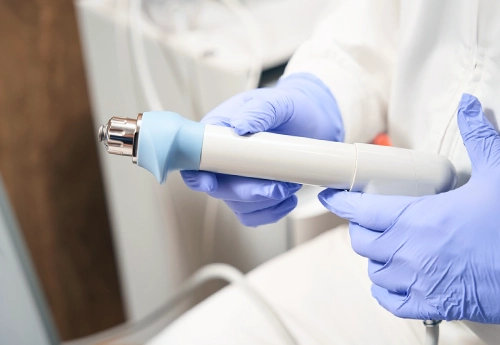
ESWT at our clinic in Ankara, Turkey is generally performed without the need for local or general anesthesia. During the procedure, a special gel is applied to the treatment area, and the device applicator is positioned over the targeted tissue. Low-intensity shock waves are then delivered at carefully controlled energy levels and frequencies. Most patients experience only mild discomfort, and the treatment is generally well tolerated. As a non-invasive procedure, ESWT requires no downtime, allowing patients to resume their normal daily activities immediately after the session.
All treatments, interventional procedures, and surgeries listed on our website are personally performed by Op. Dr. Emrah Topbaş, who has extensive experience and expertise in his field. In this personalized treatment process planned specifically for each patient, safe and effective results are aimed in accordance with the latest medical approaches and ethical principles. Every step, from diagnosis to surgery and throughout the entire treatment process, is carefully evaluated with an individualized approach.
How Is ESWT (Shock Wave Therapy) Performed in Urology?
ESWT (Shock Wave Therapy) is a non-invasive treatment method used in urology, particularly for conditions such as erectile dysfunction, Peyronie’s disease (penile curvature),and chronic pelvic pain syndrome. This method is performed by applying focused low-intensity acoustic waves to the penis or pelvic region.
During the treatment, shock waves are transmitted through the skin to the targeted tissues using a specialized device. These waves stimulate cellular healing mechanisms through a process called mechanotransduction. They promote the formation of new blood vessels (neovascularization),increase blood flow, and improve tissue oxygenation. They also contribute to pain control by reducing sensitivity in nerve endings.
Urological ESWT is generally painless and does not require anesthesia. An average session lasts 15–20 minutes and is usually performed once or twice a week, with a total of 4 to 6 sessions. Patients can return to their normal daily activities immediately after treatment. Clinical studies have shown that ESWT can improve penile vascular health in the long term, especially in the treatment of erectile dysfunction.
How Long Does ESWT Shock Wave Therapy Take?
A single ESWT session usually lasts between 15–30 minutes; however, this duration may vary depending on the treatment area, type of condition, and severity of symptoms. While shorter sessions of approximately 15–20 minutes are generally sufficient for orthopedic applications, urological applications may require slightly longer sessions. Especially in penile conditions such as erectile dysfunction and Peyronie’s disease, session duration may extend to 20–30 minutes depending on the focus area and energy level applied.
How Many Sessions of ESWT Shock Wave Therapy Are Required?
The number and duration of ESWT sessions are determined according to the patient's condition and the desired treatment outcome. For urological conditions such as erectile dysfunction, Peyronie’s disease, stress urinary incontinence, or chronic pelvic pain syndrome, a treatment program of generally 6–8 sessions is applied. Sessions are usually scheduled once or twice a week. During the treatment process, patients are monitored through regular follow-up appointments to evaluate progress and make adjustments when necessary.
ESWT Shock Wave Therapy Prices
The cost of ESWT varies depending on the treatment area, number of sessions, and the equipment of the clinic where the procedure is performed. Pricing may differ for urological applications such as erectile dysfunction, Peyronie’s disease, stress urinary incontinence, or chronic pelvic pain. While some clinics offer treatment packages, others charge per session. When determining the cost, factors such as the number of sessions required and any additional procedures are also taken into consideration.
Advantages of ESWT
ESWT offers many advantages compared to traditional treatment methods:
- It is a non-invasive method that does not require surgery.
- Local or general anesthesia is not required.
- Daily activities can usually be continued immediately after treatment.
- It stimulates natural tissue healing by increasing blood circulation.
- It provides effective and rapid results in reducing chronic pain.
- In penile applications, it improves erectile function and helps soften fibrotic plaques.
Are There Any Side Effects of ESWT?
ESWT is generally considered a safe treatment method. However, some patients may experience mild bruising, swelling, or temporary pain. These side effects are usually short-term and disappear spontaneously within a few days. Serious complications are rare, and the risk is minimized when the treatment is performed under specialist supervision.
Risks of ESWT Shock Wave Therapy
The risks associated with ESWT are minimal; however, in some cases, skin irritation, mild bleeding, or nerve irritation may occur. In addition, treatment may pose risks for pregnant women, individuals with serious bleeding disorders, or patients with infections in the treatment area. A detailed evaluation before treatment and proper patient selection significantly reduce possible complications.
Who Cannot Receive ESWT Treatment?
ESWT treatment is not suitable for everyone. Patients with bleeding disorders, individuals with pacemakers, pregnant women, and those with active infections should not undergo this treatment. In addition, patients with tumors or severe tissue damage in the target area are not treated due to potential risks. Therefore, a comprehensive evaluation before treatment is essential.
Things to Consider After ESWT Treatment
The important points to consider after ESWT treatment include:
- Avoid excessive strain on the treated area for 24 hours.
- Cold application may be used in cases of mild bruising or pain.
- Daily activities can usually be continued without restrictions.
- Do not miss regular follow-up appointments after treatment.
- Drinking plenty of water and performing light exercises support recovery.
- If any unusual condition or increase in pain occurs, consult a doctor immediately.
Differences Between ESWT and Other Treatment Methods
Unlike surgical or medication-based treatments, ESWT is a non-invasive and low-risk method. It does not require surgical intervention and has a very short recovery period. Compared to medication treatments, its side effects are minimal and it supports long-term tissue improvement. In addition, its versatile use in both orthopedic and urological conditions makes ESWT a preferred treatment option in modern medicine.
Success Rates of ESWT Treatment
The success rates of shock wave therapy vary depending on the treatment area and severity of the condition. In penile applications, especially in cases of erectile dysfunction, success rates are reported to be around 60–80%. Conditions such as Peyronie’s disease, stress urinary incontinence, and chronic pelvic pain syndrome may also respond positively with appropriate treatment protocols and proper session planning. Regular follow-up during treatment, accurate planning of the number of sessions, and the use of additional supportive therapies when necessary significantly increase the chance of success.
Update Date: 21.03.2026
*This content has been prepared in accordance with the provisions of the "Regulation on Promotion and Information Activities in Health Services" published in the Official Gazette dated 12.11.2025. The information contained in this content is for general informational purposes only and does not constitute guidance or treatment recommendations. The results of all medical procedures, including surgical and interventional procedures, may vary from person to person. For diagnostic and treatment procedures, it is essential to consult a physician and undergo an individual medical evaluation.

Patient Comments

Urology Specialist Ankara, Turkey
 About MeOp. Dr. Emrah Topbaş
Urology Specialist Surgeon Dr. Emrah Topbaş is specialized in prostate, andrology, and pelvic floor treatments. He provides modern diagnostic and treatment services in Ankara.
Read More All TreatmentsSpecialist Doctor Assurance
All treatments, interventional procedures, and surgeries are personally performed by Op. Dr. Emrah Topbaş. Each case is carefully planned in line with current medical practices and ethical principles.
Read More In the PressVisual and Written Media
He closely follows current developments in the field of urology and frequently appears in the media, contributing to interviews and informative content aimed at raising public awareness.
Read More
 About Me
 Contact
 Whatsapp