
 Türkçe
 English
He is a urologist who prioritizes patient satisfaction and stands out with his reliable approach and successful treatments.
Benign Prostatic Hyperplasia (BPH)
What Is Benign Prostatic Hyperplasia (BPH)?
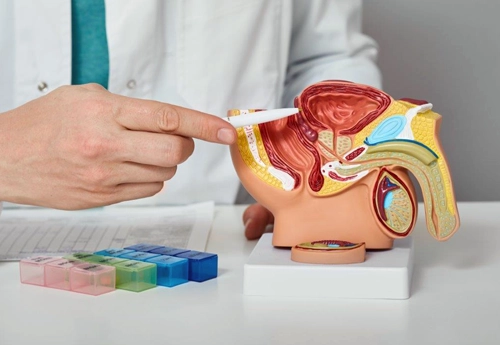
Benign prostatic hyperplasia (benign prostatic hyperplasia - BPH) is a common and generally progressive condition in which the prostate gland enlarges with age, compressing the urethra. It is especially common in men over the age of 50 and can lead to urinary dysfunction. Although this enlargement is not malignant (cancerous),it can significantly reduce quality of life.
The proliferation of glandular cells within the inner portion of the prostate narrows the urethra, making it difficult for the bladder to empty completely. BPH should not be confused with prostate cancer, as it involves different cellular processes and is not directly life-threatening. However, worsening symptoms may lead to complications affecting the urinary tract and kidney function.
Causes of Benign Prostatic Hyperplasia (BPH)
Age is the most important risk factor in the development of benign prostatic hyperplasia. However, hormonal changes, genetic predisposition, obesity, insulin resistance, and a sedentary lifestyle also increase the risk. Elevated levels of dihydrotestosterone (DHT) directly stimulate prostate enlargement.
Chronic inflammation and oxidative stress are also among the factors that promote cellular proliferation. BPH tends to be more severe in African American men, whereas it is generally milder in men of Asian descent. Individuals with a family history of BPH may experience earlier onset and faster progression of the disease.
What Are the Symptoms of Benign Prostatic Hyperplasia?
The most common symptoms of BPH involve changes in urinary function. Patients often experience a weak urine stream, difficulty starting urination, frequent nighttime urination (nocturia),a sudden urge to urinate, a feeling of incomplete bladder emptying, and post-void dribbling. In some cases, symptoms are mild, while in others they can significantly interfere with daily and social life.
Over time, the bladder muscles become thicker as they work harder to empty the bladder, which may result in urinary retention and bladder dysfunction. If left untreated, the upper urinary tract may eventually be affected, potentially leading to kidney failure.
- Weak Urine Stream: Urine flows weakly, slowly, or intermittently.
- Difficulty Starting Urination: Delayed initiation of urination despite a full bladder.
- Frequent Urination: The need to urinate more often, especially at night (nocturia).
- Urgency: A sudden, difficult-to-control urge to urinate.
- Feeling of Incomplete Bladder Emptying: A sensation that the bladder has not emptied completely after urination.
- Post-Void Dribbling: Continued leakage or dribbling of urine after finishing urination.
- Burning or Discomfort During Urination: This symptom may occur if a urinary tract infection is present.
- Blood in the Urine (Hematuria): Although uncommon, it may occur in advanced cases.
How Is Benign Prostatic Hyperplasia Diagnosed?
Diagnosis of benign prostatic hyperplasia (BPH) begins with a detailed medical history and physical examination. The severity of symptoms is evaluated using the International Prostate Symptom Score (IPSS). A digital rectal examination (DRE) is performed to assess the size and surface characteristics of the prostate.
Blood tests are used to measure prostate-specific antigen (PSA) levels to help rule out prostate cancer. Additional diagnostic tools include uroflowmetry to assess urine flow rate, ultrasound to determine post-void residual urine volume, and, when necessary, multiparametric MRI. Once the diagnosis is confirmed, the most appropriate treatment plan is determined.

Benign Prostatic Hyperplasia (BPH) Treatment in Ankara
The primary goal of benign prostatic hyperplasia (BPH) treatment in Ankara is to relieve symptoms that negatively affect the patient's quality of life and to prevent possible complications involving the urinary tract. The treatment approach is individualized based on the patient's age, overall health, severity of symptoms, and the impact of prostate enlargement on bladder function. Depending on these factors, treatment options may range from lifestyle modifications and medications to surgical intervention.
All treatments, interventional procedures, and surgical operations presented on our website are personally performed by Op. Dr. Emrah Topbaş, who has extensive experience and expertise in the field. Every treatment plan is tailored to the individual patient, with the goal of achieving safe and effective outcomes through the latest medical approaches and ethical standards. From diagnosis to surgery and follow-up care, every stage is carefully evaluated and customized according to each patient's needs.
1. Active Surveillance and Lifestyle Modifications
For patients with mild symptoms, the initial approach is usually active surveillance combined with lifestyle modifications. This strategy is highly effective for cases in which symptoms remain stable over time. Reducing caffeine and alcohol consumption, limiting fluid intake in the evening, engaging in regular physical activity, and avoiding delaying urination can help improve symptoms. In some cases, bladder training and double voiding techniques may also be recommended.
2. Medication for Benign Prostatic Hyperplasia (BPH)
Medication is the most commonly used treatment option for patients with moderate to severe symptoms. The most frequently prescribed medications are alpha-adrenergic blockers (such as tamsulosin and alfuzosin). These drugs relax the smooth muscles of the prostate and bladder neck, improving urine flow and providing rapid symptom relief.
Another commonly used group consists of 5-alpha reductase inhibitors (such as finasteride and dutasteride). These medications reduce prostate size by blocking the effects of the hormone dihydrotestosterone (DHT). However, their benefits usually become noticeable after several months of treatment. In some patients, both medication groups may be used together, particularly in individuals with enlarged prostates and rapidly progressing symptoms.
Phosphodiesterase-5 inhibitors (such as tadalafil) may also be beneficial for patients experiencing both erectile dysfunction and BPH symptoms, as they can address both conditions simultaneously.
3. Minimally Invasive Procedures
For patients who do not respond adequately to medication or who cannot tolerate medication-related side effects, minimally invasive procedures offer an important alternative. These treatments are typically performed on an outpatient basis and involve shorter recovery times than conventional surgery. Techniques such as Transurethral Microwave Therapy (TUMT),Transurethral Needle Ablation (TUNA),the Prostatic Urethral Lift (UroLift),and Water Vapor Thermal Therapy (Rezūm) are designed to reduce prostate tissue volume and relieve urinary symptoms. Numerous clinical studies have demonstrated the effectiveness of these procedures, with generally lower complication rates than traditional surgical techniques.
4. Benign Prostatic Hyperplasia (BPH) Surgery
Surgical intervention may be necessary in patients with severe prostate enlargement, bladder damage, urinary retention, or other significant complications. Transurethral Resection of the Prostate (TURP) is considered the gold standard surgical treatment. During the procedure, excess prostate tissue is removed through the urethra, restoring normal urine flow. TURP provides excellent long-term symptom control for many patients.
Alternative surgical options include open prostatectomy for very large prostates and Holmium Laser Enucleation of the Prostate (HoLEP),a minimally invasive laser technique. HoLEP is particularly effective for large prostates, allowing complete removal of obstructive tissue while offering the advantage of reduced bleeding risk.
5. Personalized Treatment and Follow-up
One of the most important factors for successful BPH treatment is developing an individualized treatment plan. Even patients with similar symptoms may differ significantly in age, accompanying medical conditions, and personal expectations. Therefore, treatment should be tailored according to each patient's priorities, lifestyle, and overall health. Regular follow-up appointments and PSA monitoring are also essential components of long-term management.
In conclusion, benign prostatic hyperplasia should be managed through a comprehensive and individualized approach. Thanks to modern medical advances—including medications, minimally invasive procedures, and surgical treatments—the majority of patients experience significant improvements in their quality of life.
What Helps Relieve Benign Prostatic Hyperplasia?
A healthy diet, regular exercise, reducing caffeine and alcohol consumption, avoiding delaying urination, and ensuring complete bladder emptying may help relieve symptoms. Although herbal supplements such as saw palmetto have been suggested to improve symptoms in some patients, scientific evidence supporting their effectiveness remains limited.
How Large Can a Benign Enlarged Prostate Become?
A normal prostate typically weighs between 20 and 30 grams. With BPH, however, it may enlarge to 100 grams or more. It is important to note that prostate size does not always correlate with symptom severity; a relatively small prostate may cause severe symptoms, while a much larger prostate may produce only mild complaints.
Follow-up and Recommendations After Benign Prostatic Hyperplasia (BPH) Treatment
Regular follow-up is essential after treatment for benign prostatic hyperplasia (BPH). PSA levels, urine flow tests, and symptom assessments should be performed periodically. Patients who undergo surgery or minimally invasive procedures should also be monitored for possible complications such as infection, bleeding, or urinary retention. Patients should receive guidance regarding adequate fluid intake, bladder exercises, healthy voiding habits, and adherence to prescribed medications. Lifestyle modifications can significantly improve long-term treatment outcomes.
Frequently Asked Questions About Benign Prostatic Hyperplasia (BPH)
Does benign prostatic hyperplasia cause pain?
BPH usually does not cause pain. However, associated conditions such as urinary tract infections, bladder stones, or excessive pressure on the bladder may lead to pain. Some patients may also experience a feeling of fullness or discomfort in the perineal area.
Can benign prostatic hyperplasia turn into cancer?
No. Benign prostatic hyperplasia (BPH) does not develop into cancer. Although both conditions affect the prostate gland, BPH does not increase the risk of prostate cancer. However, both conditions can occur simultaneously, which is why regular urological check-ups are important.
What Is the Difference Between Benign Prostatic Hyperplasia and Prostate Cancer?
Benign prostatic hyperplasia (BPH) and prostate cancer are two distinct conditions. BPH is a benign enlargement of the prostate, whereas prostate cancer is a malignant disease caused by abnormal cellular mutations. Although both conditions may enlarge the prostate, BPH typically originates in the transitional zone of the gland.
Prostate cancer, on the other hand, most commonly develops in the peripheral zone. PSA levels may be elevated in both conditions; therefore, an elevated PSA level alone cannot distinguish between them. If clinically indicated, a prostate biopsy may be required. During a digital rectal examination, an irregular or hard nodule may raise suspicion for prostate cancer.
What Are the PSA Levels in Benign Prostatic Hyperplasia?
BPH may cause a mild increase in prostate-specific antigen (PSA) levels. However, elevated PSA may also indicate prostate cancer, so a definitive diagnosis cannot be made based solely on the PSA result. PSA testing is an important tool in diagnosis and treatment planning but should always be interpreted together with clinical findings and additional diagnostic tests.
Can an Enlarged Prostate Shrink Again?
Medication may reduce prostate size to some extent. In particular, 5-alpha reductase inhibitors have been shown to decrease prostate volume. However, the prostate rarely returns to its original size naturally. Surgical treatment can achieve a more significant reduction in prostate size.
Does Frequent Sexual Activity Benefit the Prostate?
Research suggests that regular sexual activity may have positive effects on prostate health. Ejaculation helps empty prostatic fluid regularly, which may reduce congestion within the gland. However, the extent of this benefit varies from person to person.
When Should You See a Urologist for Benign Prostatic Hyperplasia?
You should consult a urologist if you experience difficulty urinating, increased nighttime urination, sudden urinary urgency, a feeling of incomplete bladder emptying, or a weak urine stream. Early evaluation is also recommended for individuals with recurrent urinary tract infections or a history of bladder stones. Delaying treatment may result in impaired kidney function and other serious complications.
Is Benign Prostatic Hyperplasia Dangerous?
Benign prostatic hyperplasia (BPH) is not life-threatening by itself, but if left untreated, it can lead to serious complications. These may include urinary retention, bladder stones, recurrent urinary tract infections, and impaired kidney function. BPH can also significantly reduce quality of life. Therefore, regular monitoring and timely treatment are strongly recommended.
Where Does Benign Prostatic Hyperplasia Cause Pain?
Benign prostatic hyperplasia (BPH) itself usually does not cause pain. However, severe bladder distension may produce pressure, fullness, or discomfort in the lower abdomen. If a urinary tract infection develops, burning during urination and discomfort in the lower abdomen or pelvic region may occur. Although the prostate itself is generally not painful, BPH may indirectly contribute to these symptoms.
What Happens If Benign Prostatic Hyperplasia Is Not Treated Surgically?
In patients who require surgery but do not undergo treatment, symptoms may continue to worsen over time. The bladder muscles may weaken, the risk of urinary retention increases, and kidney function may eventually be affected. Some patients may require long-term catheterization. Although not every patient with BPH needs surgery, timely intervention can help prevent more serious complications.
How Can the Prostate Be Reduced in Size?
The most effective medications for reducing prostate size are 5-alpha reductase inhibitors, which decrease the production of dihydrotestosterone (DHT). Laser procedures and surgical techniques can also physically reduce prostate volume. The effectiveness of herbal supplements has not been conclusively proven. A healthy diet, anti-inflammatory nutrition, and regular physical activity may also support overall prostate health.
Does an Enlarged Prostate Affect Erectile Function?
Yes. Both benign prostatic hyperplasia and certain medications used to treat it may affect sexual function. In particular, 5-alpha reductase inhibitors may cause decreased libido and erectile dysfunction. In addition, the psychological burden of urinary symptoms may negatively affect sexual performance. With modern treatment approaches, these side effects can often be minimized.
Update Date: 20.03.2026
*This content has been prepared in accordance with the provisions of the "Regulation on Promotion and Information Activities in Health Services" published in the Official Gazette dated 12.11.2025. The information contained in this content is for general informational purposes only and does not constitute guidance or treatment recommendations. The results of all medical procedures, including surgical and interventional procedures, may vary from person to person. For diagnostic and treatment procedures, it is essential to consult a physician and undergo an individual medical evaluation.

Patient Comments

Urology Specialist Ankara, Turkey
 About MeOp. Dr. Emrah Topbaş
Urology Specialist Surgeon Dr. Emrah Topbaş is specialized in prostate, andrology, and pelvic floor treatments. He provides modern diagnostic and treatment services in Ankara.
Read More All TreatmentsSpecialist Doctor Assurance
All treatments, interventional procedures, and surgeries are personally performed by Op. Dr. Emrah Topbaş. Each case is carefully planned in line with current medical practices and ethical principles.
Read More In the PressVisual and Written Media
He closely follows current developments in the field of urology and frequently appears in the media, contributing to interviews and informative content aimed at raising public awareness.
Read More
 About Me
 Contact
 Whatsapp